Diabetic Retinopathy: Causes, Symptoms, Treatment

Say Goodbye to Glasses with Blade-Free LASIK | Gupte Eye Hospital Panipat
December 23, 2025Understanding Glaucoma: Symptoms, Causes, Diagnosis, Treatment
January 12, 2026Diabetic Retinopathy: Causes, Symptoms, Treatment
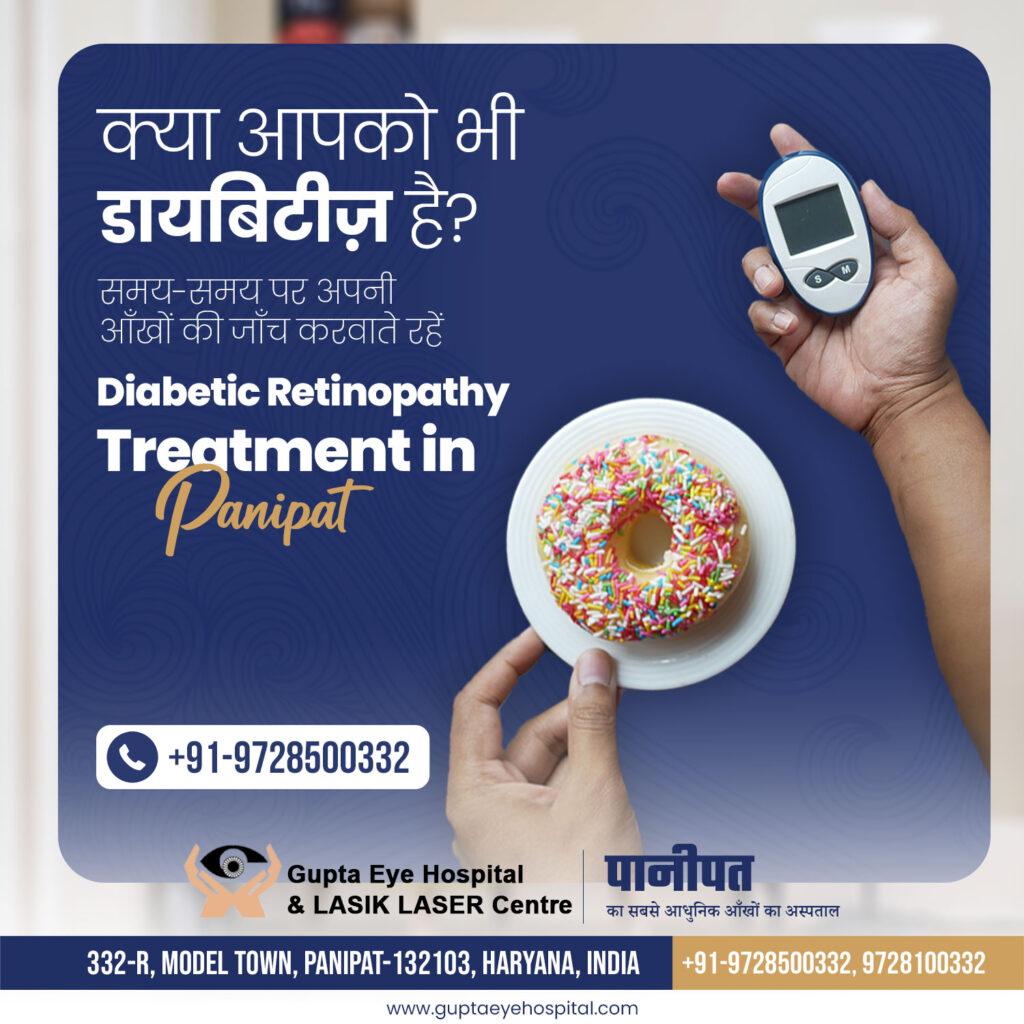
Diabetes affects many parts of the body — including the eyes. One of the most serious eye complications is diabetic retinopathy, a condition that damages the retina’s tiny blood vessels and can lead to vision loss if untreated. The encouraging news is that early detection and modern treatment can protect sight. At Gupta Eye Hospital, comprehensive eye evaluations help diabetic patients monitor and manage retinal health effectively.
What Is Diabetic Retinopathy?
Diabetic retinopathy occurs when prolonged high blood sugar levels weaken and damage the small blood vessels in the retina — the light-sensitive tissue at the back of the eye responsible for clear vision.
Over time, these vessels may leak fluid, swell, or close off entirely. In advanced stages, abnormal new blood vessels can grow, further threatening vision.
Causes and Risk Factors
The primary cause is uncontrolled diabetes, but several factors increase risk:
- Long duration of diabetes
- Poor blood sugar control
- High blood pressure
- High cholesterol
- Pregnancy
- Smoking
The longer a person lives with diabetes, the greater the likelihood of retinal changes — making routine eye exams essential.
Symptoms to Watch For
Diabetic retinopathy often develops silently. When symptoms appear, they may include:
- Blurred or fluctuating vision
- Dark spots or floaters
- Difficulty seeing at night
- Distorted vision
- Sudden vision loss in advanced cases
Any change in vision should prompt immediate eye evaluation.
Diagnosis
A comprehensive diabetic eye exam may include:
- Dilated retinal examination
- Retinal imaging scans
- Optical coherence testing
- Fluorescein angiography when required
These tests reveal early retinal damage before noticeable symptoms arise.
Prevention and Eye Protection
The best protection is proactive care:
- Maintain healthy blood sugar levels
- Control blood pressure and cholesterol
- Get annual dilated eye exams
- Follow medical advice consistently
- Adopt healthy lifestyle habits
These tests reveal early retinal damage before noticeable symptoms arise.